Why Hearing Is Essential for Cognitive Health and Connection
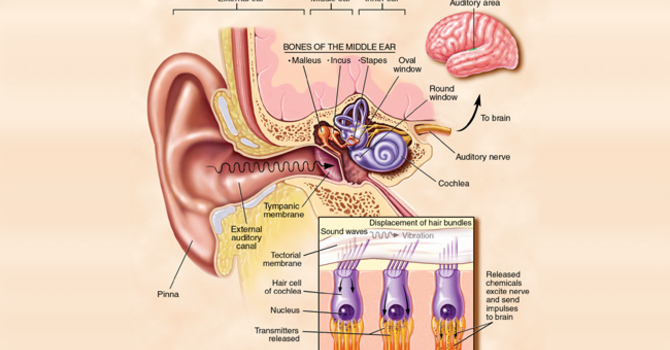
Hearing is not just about the ears - it’s a brain-based process. Sound enters the ear, but the brain is responsible for interpreting speech, understanding conversation, and making sense of the world around us.
Leading organizations such as American Academy of Audiology, Academy of Doctors of Audiology, and ASHA emphasize that hearing care is an important part of overall brain health.
If you take a look at the graph, you can see: Research shows that Hearing Loss is the #1 modifyable risk factor in mid-life that contributes to demetia. "Modifyable" means it's within our control to do something about it. That means, if we address our hearing loss appropriately, we can reduce the risk of dementia.
How Hearing and the Brain Work Together
Hearing involves:
- Sound traveling through the ear
- Signals sent to the auditory nerve
- The brain interpreting speech, meaning, and context
When hearing input is reduced, the brain has to work harder to fill in missing information - especially in background noise. This increased effort can lead to mental fatigue and frustration.
What Research Shows About Hearing Loss & Brain Health
Research cited by audiology organizations and industry partners, including The Academy of Doctors of Audiology and American Academy of Audiology, shows that untreated hearing loss is associated with increased listening effort, social withdrawal, and cognitive strain.
While hearing loss does not cause dementia, it is considered a modifiable risk factor - meaning it’s something that can be addressed with proper care.
Key findings include:
- Untreated hearing loss increases cognitive load
- Reduced auditory stimulation can affect how the brain processes sound
- Difficulty hearing often leads to social isolation, which is a known risk factor for cognitive decline
The focus is on prevention, support, and maintaining engagement - not fear.
How Hearing Aids Support Brain Health
When professionally fit and properly programmed, hearing aids can:
- Restore access to speech sounds
- Reduce listening effort
- Improve communication clarity
- Support social connection
- Keep auditory pathways active
Hearing aids are most effective when paired with audiologist-led care, including diagnostic testing, verification, and ongoing follow-up.
Why Professional Hearing Care Matters
Because hearing is processed by the brain, hearing aids are not plug-and-play devices. Successful outcomes depend on:
- Comprehensive hearing evaluations
- Individualized programming
- Real-world fine-tuning
- Long-term support as hearing needs change
This healthcare-based approach is why audiologist-led care is considered the gold standard.
When to Consider a Hearing Evaluation
You may benefit from a hearing evaluation if you:
- Struggle to understand speech in noise
- Ask others to repeat themselves
- Feel mentally exhausted after conversations
- Avoid social situations
- Have concerns about memory or concentration
A hearing evaluation is a proactive step in supporting both hearing and brain health.
Our Approach at Texas Hearing Center
At Texas Hearing Center, we view hearing care as part of whole-person health. Our focus is on education, evidence-based care, and long-term support - helping patients stay connected to the world and the people they care about.
We proudly serve Humble, Kingwood, Atascocita, Porter, Valley Ranch, New Caney, and surrounding Conroe areas.
View our informative blogs on brain health and Memory here.