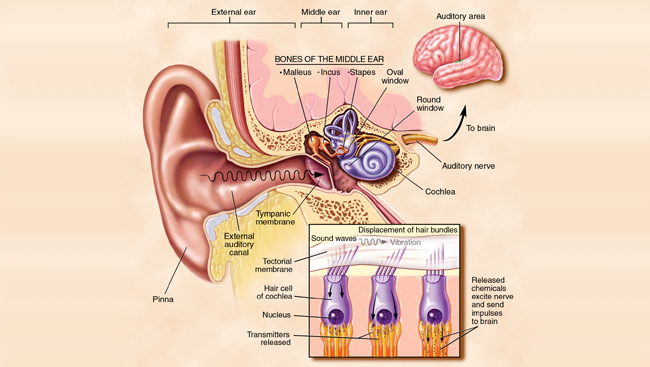
Many people worry about memory changes as they age, but few realize that hearing health plays an important role in how the brain processes and remembers information.
Hearing is not passive. While sound enters through the ears, it is the brain that organizes, interprets, and stores what we hear. When hearing becomes more difficult, the brain must work harder just to understand speech-leaving fewer mental resources available for memory.
How Hearing Loss Affects the Brain
Research summarized by organizations such as American Academy of Audiology and ASHA shows that untreated hearing loss is associated with increased cognitive load.
This means:
- The brain spends more effort decoding sound
- Less energy is available for memory and comprehension
- Conversations become mentally exhausting
Over time, this increased effort can make it harder to remember details from conversations-not because of memory failure, but because the information was never clearly processed in the first place.
Does Hearing Loss Cause Memory Loss?
No. Hearing loss does not cause dementia or memory disease.
However, it is considered a modifiable risk factor, meaning it is something that can be addressed. Studies cited across audiology research, including work supported by Starkey, show that untreated hearing loss is associated with faster cognitive decline compared to treated hearing loss.
The key distinction is association, not causation.
How Treating Hearing Loss Helps Cognitive Function
When hearing loss is properly treated:
- Speech becomes clearer
- Listening effort is reduced
- Conversations require less mental energy
- The brain can focus on understanding and memory
Professionally fit hearing aids help restore access to speech sounds, supporting the brain’s natural processing abilities.
When to Get a Hearing Evaluation
If you notice:
- Difficulty remembering conversations
- Fatigue after listening
- Trouble following group discussions
- Increased reliance on repetition
A comprehensive hearing evaluation is an important first step-not just for hearing, but for overall brain health.
Learn more about the hearing–brain connection on our Hearing & Brain Health resource page.